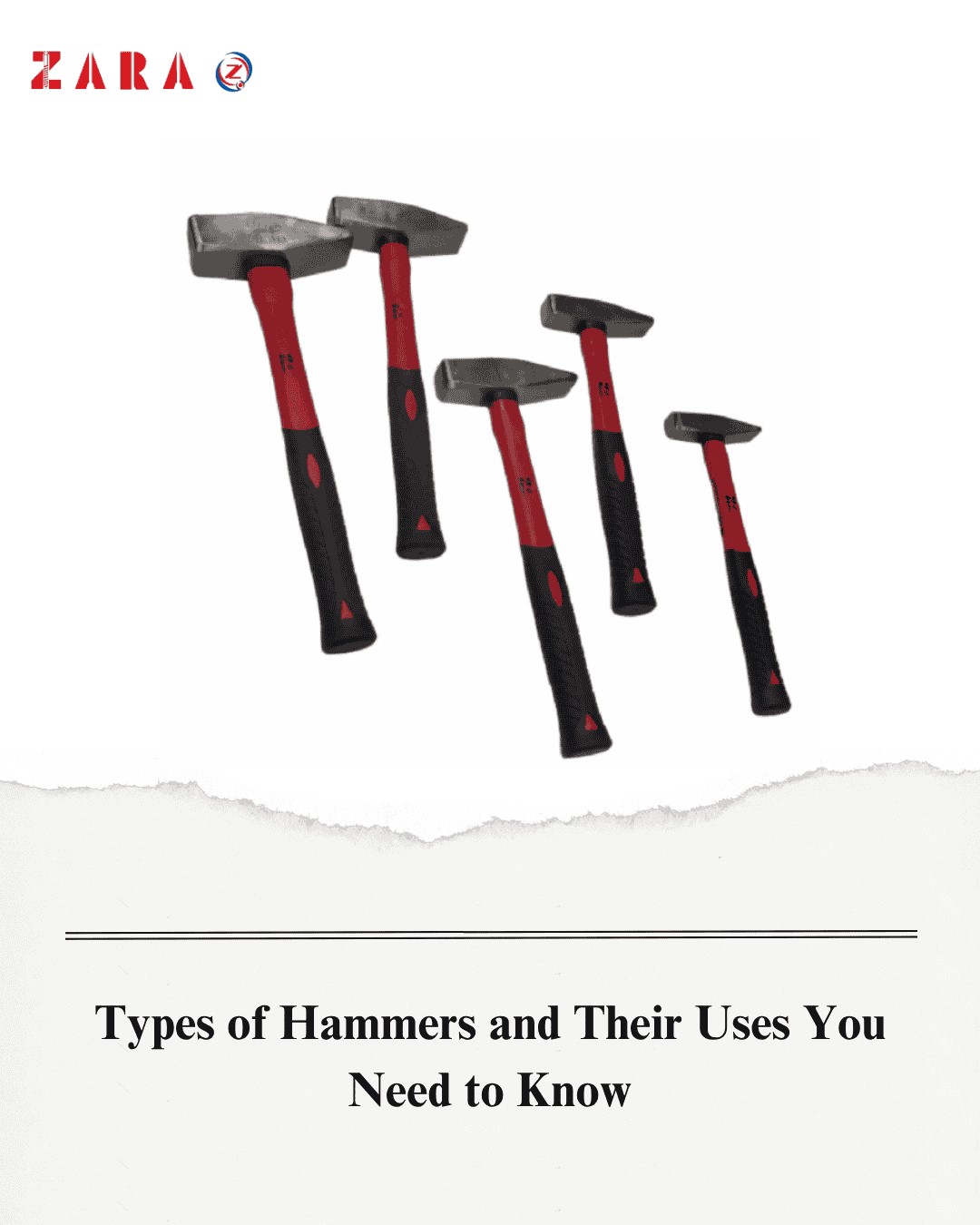
Hammers are one of the most essential hand tools in any toolbox, whether you are a professional carpenter, DIY enthusiast, or construction worker. Understanding the types of hammers and their uses can save time, prevent damage, and improve the quality of your work.
This guide will cover the most common hammers, their applications, and how to choose the right hammer for each task.
Why Understanding Hammer Types Matters
Using the wrong hammer can damage your materials, reduce productivity, and even cause injury. Understanding the uses of hammers allows you to select the right tool for each task.
Whether you are working on woodworking, metal shaping, masonry, or home improvement projects, knowing the types of hammers for carpentry and construction ensures better results and a safer work environment.
By selecting the correct hammer, you can also avoid unnecessary wear on your tools and improve your overall efficiency.
1. Claw Hammer
The claw hammer is one of the most versatile hammers, especially useful in woodworking and general carpentry projects. Its flat striking surface is ideal for driving nails into wood, while the curved claw allows for easy nail removal without damaging the surface.
If you are wondering what the best claw hammer for woodworking is, choose one with an ergonomic handle and balanced weight for prolonged use. Understanding the claw hammer uses can make a huge difference when handling furniture assembly, carpentry, or DIY projects.
Familiarity with the types of hammers for carpentry ensures that your hammering tasks are both safe and efficient.
2. Ball-Peen Hammer
The ball-peen hammer is commonly used in metalworking and engineering workshops. It features a flat face and a rounded peen that is perfect for shaping and forming metal.
This hammer is ideal for metalworking hammers tasks such as peening rivets, shaping metal parts, or light metal fabrication. By understanding the hammer uses in metalwork, professionals can achieve precise results and avoid damage to sensitive metal surfaces.
A good ball-peen hammer for metalwork is durable, comfortable, and balanced for controlled strikes.
3. Sledgehammer
A sledgehammer is a heavy-duty tool with a long handle and large flat head designed for demolition and heavy construction tasks. Its power makes it perfect for breaking concrete, bricks, or masonry.
For construction tasks, you can choose from a variety of high-quality sledgehammers like the sledge hammer fibre glass handle for durability and reduced vibration, the sledge hammer wooden handle for classic grip and balance.
Using the right sledgehammer for demolition ensures efficiency and safety, making it one of the most effective types of hammers for masonry projects.
4. Tack Hammer
The tack hammer is lightweight and precise, designed for delicate projects where control is essential. Its small head allows you to tap tacks and nails into place without causing damage.
Ideal for lightweight hammer for delicate work, the tack hammer is commonly used in furniture upholstery, picture frame assembly, and fine woodworking. Knowing the tack hammer uses helps DIY enthusiasts and professionals complete precise work without mistakes.
It’s one of the most overlooked but essential types of hammers for furniture projects.
5. Rubber Mallet
A rubber mallet has a soft head that prevents surface damage while applying force. It is perfect for assembling furniture, adjusting tiles, or tapping materials into place.
Using a rubber mallet for furniture or a soft hammer for tiles ensures that surfaces remain intact while achieving the desired results. For DIY home projects, these hammers are indispensable.
Understanding the uses of hammers like rubber mallets helps you avoid scratches and dents while maintaining control during installation or assembly tasks.
6. Cross-Peen Hammer
The cross-peen hammer features a wedge-shaped peen perpendicular to the handle, which makes it ideal for shaping metal and detailed workshop tasks.
Blacksmiths and metalworkers frequently use this hammer for blacksmithing hammer applications, including forging, riveting, and precise metal shaping. By understanding cross-peen hammer uses, professionals can execute projects that require accuracy and control.
It’s one of the key types of hammers for metalwork you should know if you work with steel or iron.
7. Framing Hammer
The framing hammer is heavier than a claw hammer and is specifically designed for framing and large carpentry projects. Its long handle provides leverage for driving large nails into dense wood.
For construction tasks, a framing hammer for construction is essential. Choosing the best hammer for carpentry ensures you can work efficiently on structural projects without fatigue.
Knowledge of types of hammers for building allows contractors to select the right tool for heavy-duty tasks while maintaining precision.
8. Club Hammer
Also called a lump hammer, the club hammer is smaller than a sledgehammer but powerful enough for minor demolition tasks. Its compact size provides control for precision strikes on smaller surfaces.
The club hammer for masonry is suitable for breaking bricks, tiles, or driving chisels during construction or repair work. It’s one of the most effective small sledgehammer uses for controlled demolition, making it a valuable addition to your toolkit.
9. Dead Blow Hammer
The dead blow hammer is designed to minimize rebound and maximize impact force. It is often filled with sand or shot to absorb shock, making it ideal for precision tasks.
This hammer is perfect for dead blow hammer uses in automotive repairs, assembly work, or tasks requiring delicate strikes. Using a precision hammer for assembly ensures that surfaces remain unharmed while providing accurate results.
Knowing the types of hammers for mechanics will help you select the right tool for professional or workshop applications.
Tips for Hammer Maintenance
Proper hammer maintenance prolongs tool life and ensures optimal performance:
- Clean hammer heads regularly to prevent rust.
- Inspect handles for cracks or splinters.
- Store tools in a dry place to prevent corrosion.
- Sharpen or dress striking surfaces when necessary.
Following these simple steps helps maintain hand tool care and ensures that your types of hammers remain effective for every project.
How to Choose the Right Hammer in UAE
Choosing the right hammer for your projects in Dubai is essential to ensure efficiency, safety, and precision. The selection depends on the material, task, and level of accuracy required. Start by considering the material and durability of the hammer—look for high-quality steel heads paired with ergonomic handles to ensure long-lasting performance.
Next, choose a task-specific hammer that suits your project, whether it involves carpentry, metalwork, or masonry, so that you can achieve the best results with minimal effort. Weight and balance are also critical factors; a well-balanced hammer is comfortable to use over extended periods, reducing fatigue and improving control.
For buyers in the UAE seeking reliable tools, Al Zafeer Building Materials is a trusted supplier offering a wide range of high-quality hammers suitable for both professional contractors and DIY enthusiasts, ensuring you get the right hammer for every job.
FAQs
What is the difference between a framing hammer and a claw hammer?
A framing hammer is heavier with a longer handle for large construction tasks, while a claw hammer is lighter and ideal for general woodworking and nail removal.
Can a dead blow hammer be used for automotive repairs?
Yes, dead blow hammers are perfect for automotive work because they minimize rebound and prevent damage to parts.
How do I select the right hammer for DIY projects?
Consider the task, material, weight, and handle type. Lightweight hammers suit delicate DIY work, while heavier hammers are better for demolition or carpentry.
Conclusion
Selecting the right hammer for your projects in Dubai and across the UAE is crucial for safety, efficiency, and quality results. Consider the material and durability of the hammer first—look for high-quality steel heads and ergonomic handles for long-lasting performance. Next, match your hammer to the specific task, whether it is carpentry, metalwork, or masonry.
Weight and balance are essential; a well-balanced hammer ensures comfort and control during prolonged use. For residents and professionals seeking reliable hammers, Al Zafeer Building Materials is a leading hammer supplier in Dubai. They provide a wide range of hammers suitable for both professional contractors and DIY enthusiasts, making it easy to select the perfect tool for every job.
Ready to get the best hammers in Dubai? Contact Al Zafeer Building Materials LLC today to get expert advice, request a quote, or place your order now.
Read More Hand & Workshop Tool Insights
Explore expert guides on hand tools, cutting tools, hinges, and bathroom fittings to help you make the right choices for your workshop or projects in Dubai.
- Best Sanitaryware for a Luxury Bathroom – Discover premium bathroom fittings and sanitaryware for a high-end, stylish bathroom setup.
- Choosing Hinges for Heavy Doors – Find the best hinges to support and secure heavy doors in residential and commercial settings.
- Cutting Tool Material Guide – Discover the best materials for cutting tools to ensure durability and precision.
- Hinges and Slides: How to Choose the Best Mechanisms – Get expert tips for selecting the right hinge and slide mechanisms for your projects.
- Best Hand Tools in Dubai – Explore the top hand tools every professional or DIY enthusiast should have in Dubai.