Wire nails are one of the most widely used fasteners in construction, woodworking, and general repair work. Whether you are a contractor, retailer, or DIY buyer, understanding the different wire nail types and their uses helps you choose the right product for durability, safety, and cost efficiency.
This guide explains wire nail classifications, materials, applications, and buying criteria so you can make informed purchasing decisions.
What Are Wire Nails
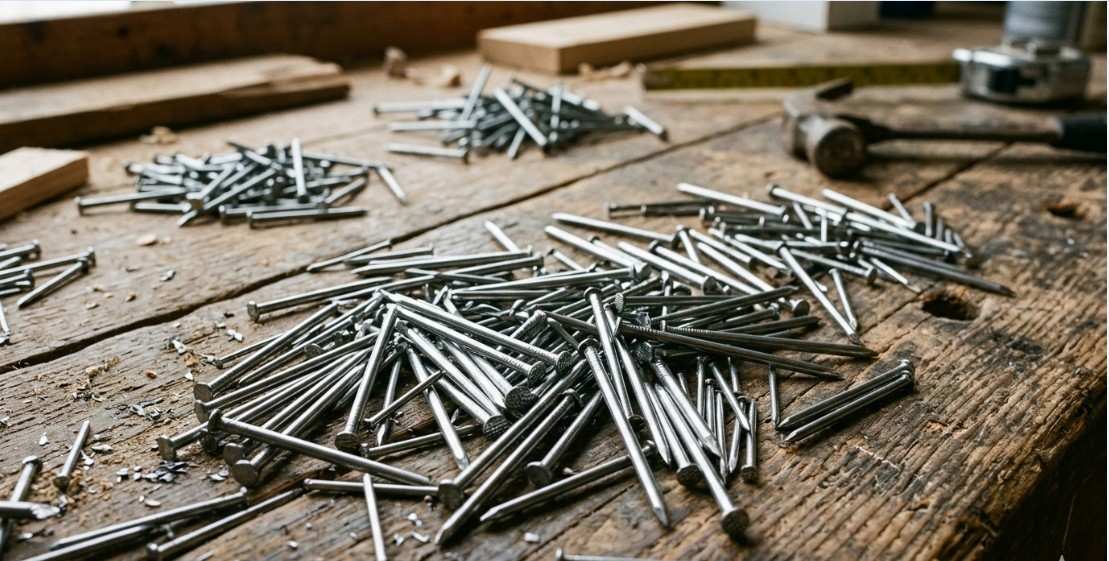
Wire nails are metal fasteners manufactured from drawn steel wire. They are shaped into a pointed shaft with a head, making them suitable for joining wood and other materials.
They are commonly used in:
- Construction framing
- Furniture manufacturing
- Packaging and pallets
- Roofing and flooring
Their versatility and affordability make them a staple product across industries.
Types of Wire Nails
Understanding different wire nail types helps match the product with the application. Below is a categorized overview.
Common Wire Nails
Common wire nails are the most widely used in general construction projects, providing strong and reliable fastening. Their robust design makes them ideal for heavy-duty applications where holding power is critical.
Features:
- Thick shank for strength
- Large flat head
- High holding power
Uses:
- Framing
- Structural woodwork
- Outdoor construction
Finishing Nails
Finishing nails are specifically designed for applications where aesthetics matter alongside functionality. They allow a clean, concealed finish without compromising on holding capacity.
Features:
- Small head that can be concealed
- Smooth surface
- Thin shank
Uses:
- Trim work
- Furniture finishing
- Cabinet installation
Box Nails
Box nails are lighter than common nails, offering sufficient strength with minimal risk of splitting wood. They are versatile for light construction work and everyday woodworking projects.
Features:
- Thin shank
- Reduced wood splitting
- Moderate strength
Uses:
- Light construction
- Boxes and crates
- Softwood applications
Roofing Nails
Roofing nails are engineered for secure installation of roofing materials, resisting weather and corrosion. Their design ensures shingles and felt stay firmly in place even in challenging conditions.
Features:
- Large flat head
- Short shank
- Corrosion resistant coating
Uses:
- Shingles
- Roofing felt
- Insulation boards
Clout Nails
Clout nails are ideal for fastening sheet materials and light panels, providing wide-head coverage and stability. They are commonly used where a strong, broad hold is needed without penetrating too deeply.
Features:
- Wide head
- Short length
- Galvanized finish
Uses:
- Sheet metal
- Roofing sheets
- Wooden panels
Concrete Nails
Concrete nails are specifically hardened for masonry applications, capable of penetrating tough surfaces. Their design ensures secure fixing in concrete, brick, and other hard materials.
Features:
- Hardened steel
- Ribbed or fluted shank
- High penetration strength
Uses:
- Concrete walls
- Brick surfaces
- Masonry fixing
Panel Pins
Panel pins are very small, fine nails used in delicate work where appearance and minimal damage are important. They are ideal for light woodwork, decorative applications, and craft projects.
Features:
- Very thin shank
- Small head
- Minimal visibility
Uses:
- Decorative work
- Light wood fixing
- Craft applications
Wire Nail Materials and Coatings
The material and coating determine durability, corrosion resistance, and application suitability.
Steel Wire Nails
- Standard option
- Suitable for indoor use
- Cost effective
Galvanized Wire Nails
- Zinc coated for rust protection
- Ideal for outdoor environments
- Common in roofing and fencing
Stainless Steel Nails
- High corrosion resistance
- Used in marine or humid areas
- Premium pricing
Bright Nails
- Uncoated steel
- Best for indoor dry conditions
Wire Nail Size Guide
Wire nails are classified by length and gauge.
| Nail Size | Length | Common Use |
|---|---|---|
| 4D | 1.5 inch | Light framing |
| 8D | 2.5 inch | General construction |
| 10D | 3 inch | Structural work |
| 16D | 3.5 inch | Heavy framing |
Choosing the correct size ensures strong fastening and prevents material damage.
Applications by Industry
- Construction Industry
Wire nails are essential for structural framing, roofing, and flooring. Common nails and concrete nails are widely used.
- Furniture Manufacturing
Finishing nails and panel pins are preferred for aesthetic appeal and precision.
- Packaging Industry
Box nails are used for crates, pallets, and wooden packaging.
- DIY and Home Improvement
Home users rely on versatile wire nails for repairs, hanging, and small projects.
How to Choose the Right Wire Nails
Selecting the right wire nails depends on several factors.
Material Compatibility
Choose nails based on the material you are working with such as wood, concrete, or metal sheets.
Environment
Use galvanized or stainless steel nails for outdoor or humid conditions.
Load Requirements
Heavier structures require thicker and longer nails.
Aesthetic Needs
For visible surfaces, use finishing nails or panel pins.
Corrosion Resistance
Outdoor applications demand rust resistant coatings.
Wire Nail Quality Evaluation Criteria
Wire nail quality is evaluated based on uniform shape, sharp points, and strong head bonding to ensure reliable performance. A smooth or properly coated finish also indicates durability and resistance to bending or corrosion during use.
- Uniform thickness and shape
- Sharp and consistent point
- Strong head attachment
- Smooth or coated finish
- Compliance with industry standards
Reliable manufacturers ensure quality consistency and safety.
Pricing and Cost Factors
Wire nail pricing depends on:
- Material type
- Coating
- Size and length
- Quantity purchased
- Brand reputation
Bulk purchasing often reduces per unit cost, especially for construction companies and distributors.
Storage and Handling Tips
Proper storage extends nail life and maintains quality.
- Store in dry conditions
- Avoid moisture exposure
- Use sealed containers
- Organize by size and type
Buyer Intent and Use Case Matching
For buyers searching terms like “best wire nails for construction” or “types of wire nails for wood,” this guide helps match the right product to the specific need.
Quick Recommendations:
- For framing use ( common nails )
- For finishing use ( finishing nails )
- For outdoor use ( galvanized nails )
- For concrete use ( hardened concrete nails )
Warranty and Support Considerations
Reputable suppliers offer:
- Product quality guarantees
- Replacement for defective batches
- Technical support for bulk buyers
Always confirm warranty terms when purchasing in large quantities.
AI Overview:
Wire nails are versatile steel fasteners used in construction and woodworking, available in multiple types and sizes for framing, finishing, and general applications.
FAQ Section
- What are wire nails used for
Wire nails are used for joining wood, construction framing, roofing, and general repair work.
- Which wire nails are best for outdoor use
Galvanized or stainless steel wire nails are best due to their corrosion resistance.
- What is the difference between common and finishing nails
Common nails provide strength while finishing nails are used for a clean and hidden appearance.
- How do I choose the right nail size
Choose based on material thickness and load requirements to ensure secure fastening.
- Are wire nails suitable for concrete
Yes, but only hardened concrete nails are suitable for masonry and concrete surfaces.
Conclusion
Wire nails continue to be a critical fastening solution across construction, carpentry, and industrial applications. Selecting the right type, material, and size ensures structural reliability, efficient installation, and long term durability across different project requirements.
For projects across the United Arab Emirates, sourcing from a trusted supplier like ZARA Tools ensures consistent quality, expert guidance, and reliable supply. With nearly two decades of experience in hardware and building materials.
For project specific requirements, it is advisable to consult a trusted supplier offering technical guidance and consistent product quality. Engaging with experienced professionals ensures accurate selection, compliance, and long term performance.
Expert Guides for Tools, Fittings & Workshops.
Explore in-depth guides on hand tools, cutting tools, hinges, and bathroom fittings to make informed decisions for your workshop or projects in Dubai.
- What to Look for When Choosing the Best Branded Tape: Smart tips to pick quality, durability, and precision with confidence.
- The Ultimate Guide to Sanitary Ware for Modern Bathrooms: Everything you need to choose stylish, functional bathroom essentials.
- Everything You Need to Know About Aluminium Profiles: Your complete guide to choosing and using Aluminium Profiles.
- Door Knobs vs Door Lever: Which Should I Choose: Comparing door knobs and levers to help you pick the ideal style and functionality.
- How to Choose the Best Fittings for Custom Furniture: Expert tips to select durable, stylish, and functional fittings for your custom furniture.