A hacksaw is one of the most widely used hand tools for cutting metal, plastic, PVC pipes, and other hard materials. It is commonly found in workshops, construction sites, garages, and maintenance departments because it provides precise cuts without requiring electricity. Whether you are a professional fabricator, plumber, electrician, mechanic, or DIY enthusiast, a hacksaw is a reliable tool for everyday cutting tasks.
In this guide, you’ll learn what a hacksaw is, its different types, blade options, common uses and essential safety practices.
What Is a Hacksaw?
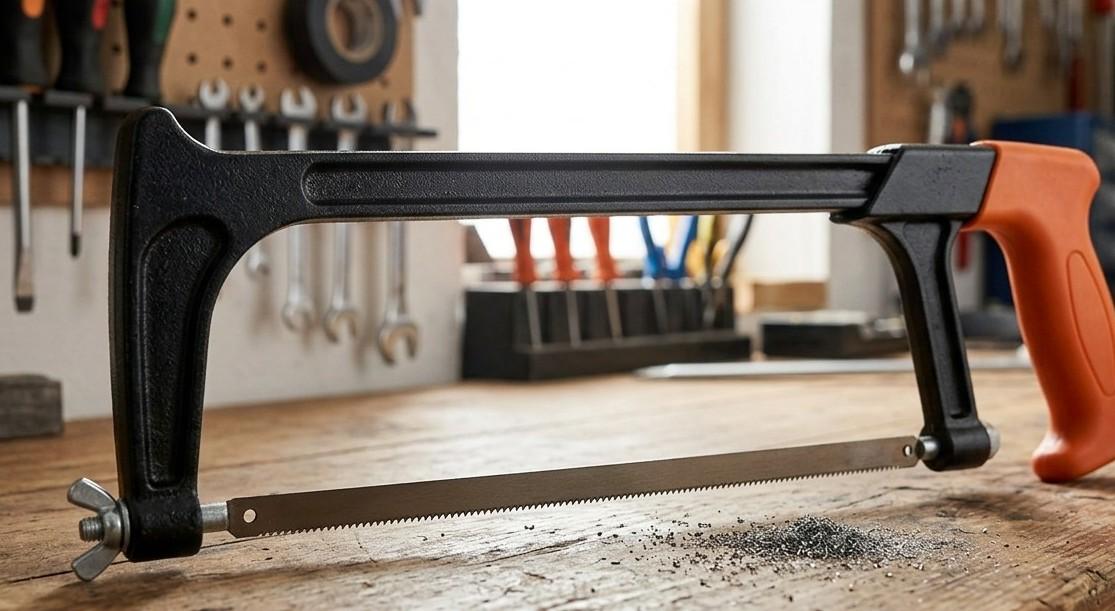
A hacksaw is a manual cutting tool that consists of a sturdy metal frame and a thin replaceable blade held under tension. The blade features small teeth designed to cut hard materials such as steel, aluminum, copper, brass, plastic, and PVC.
Unlike wood saws, most hacksaw blades are installed with the teeth pointing forward, allowing the tool to cut during the push stroke. Proper blade tension and the correct blade type help produce smoother cuts while reducing the chance of blade breakage.
Main Parts of a Hacksaw
| Part | Function |
| Frame | Supports and holds the blade |
| Blade | Performs the cutting |
| Handle | Provides grip and control |
| Tension Screw | Keeps the blade securely tightened |
| Blade Pins | Lock the blade in place |
Types of Hacksaws
Different cutting applications require different types of hacksaws.
Fixed Frame Hacksaw
A fixed frame hacksaw is designed for one blade size, typically 12 inches. Its rigid construction offers better stability and is ideal for workshop use and metal fabrication.
Adjustable Frame Hacksaw
An adjustable frame hacksaw accommodates different blade lengths, making it the most versatile option for professionals.
Advantages
- Suitable for multiple blade sizes
- Ideal for maintenance work
- Greater flexibility for different applications
Junior Hacksaw
A junior hacksaw is compact and lightweight, making it suitable for cutting plastic pipes, thin metal sheets, small bolts, and electrical conduit in confined spaces.
Hacksaw Blade Types
The blade has the greatest impact on cutting performance.
Carbon Steel Blade
Suitable for cutting soft metals, plastic, PVC, and mild steel. It is affordable but wears out faster.
High Speed Steel Blade
Designed for harder materials such as stainless steel, offering excellent wear resistance.
Bi Metal Hacksaw Blade
A bi metal hacksaw blade combines a flexible steel body with hardened cutting teeth. It provides longer life, improved durability, and reduced blade breakage, making it the preferred choice for professionals.
How to Choose the Right Hacksaw Blade TPI
The number of teeth per inch (TPI) affects how quickly and cleanly a hacksaw cuts. A lower TPI removes material faster, while a higher TPI produces smoother cuts on thinner materials.
| Blade TPI | Best For |
| 18 TPI | Thick steel bars, pipes, and heavy sections |
| 24 TPI | General-purpose cutting of metal, PVC, and conduit |
| 32 TPI | Thin sheet metal, tubing, and precision cutting |
As a general rule, keep at least two to three teeth engaged with the material throughout the cut. This helps prevent snagging, produces a smoother finish, and reduces the risk of blade damage.
Common Uses of a Hacksaw
A hacksaw is used across many industries for cutting different materials.
Metal Fabrication
Cuts steel rods, aluminum bars, metal pipes, flat bars, and tubing.
Plumbing
Used for cutting PVC pipes, plastic fittings, CPVC, and copper pipes.
Electrical Work
Ideal for trimming metal conduits, cable trays, raceways, and mounting brackets.
Automotive Repairs
Commonly used for cutting bolts, brackets, and exhaust pipes.
Construction
Suitable for cutting reinforcement bars, threaded rods, and metal framing.
How to Choose the Right Hacksaw
Choosing the right hacksaw depends on the material, frequency of use, and blade quality.
Consider these factors:
- A strong frame that maintains blade tension
- A comfortable ergonomic handle
- A blade suitable for the material being cut
- A high quality bi metal blade for longer life
- Easy blade replacement
A quality hacksaw improves cutting accuracy while reducing user fatigue.
How to Use a Hacksaw Properly
Using the correct cutting technique helps produce cleaner cuts and extends blade life.
- Secure the workpiece firmly using a vise.
- Install the blade with the teeth facing forward.
- Tighten the blade correctly.
- Begin with slow strokes to create a guide groove.
- Use long, smooth strokes with consistent pressure.
- Reduce pressure near the end of the cut to avoid damaging the blade.
Avoid twisting the blade while cutting, as this may cause it to break.
Hacksaw Safety Tips
Always follow these safety practices when using a hacksaw:
- Wear safety glasses.
- Secure the material before cutting.
- Inspect the blade before use.
- Replace worn or damaged blades immediately.
- Maintain proper blade tension.
- Avoid applying excessive force.
- Store the hacksaw in a clean, dry place.
Regular cleaning and proper storage help prevent rust and extend the life of both the frame and blade.
Why Choose a Quality Hacksaw?
A quality hacksaw provides straighter cuts, better durability, and improved comfort. Combined with the right blade, it delivers reliable performance for construction, plumbing, fabrication, and maintenance work.
Conclusion
A hacksaw remains an essential hand tool for accurate and reliable cutting in metalworking, plumbing, electrical installation, and general maintenance. By selecting the right hacksaw and following proper cutting and safety practices, you can achieve cleaner cuts, improve efficiency, and extend the life of your tool.
Whether you need a heavy duty hacksaw for fabrication or a compact junior hacksaw for maintenance work, Zara Tools offers reliable cutting tools for a wide range of industrial and workshop applications. Contact our team for expert guidance in selecting the right hacksaw and blade for your requirements.
Expert Guides for Tools, Fittings & Workshops
Explore in-depth guides on hand tools, cutting tools, hinges, and bathroom fittings to make informed decisions for your workshop or projects in Dubai.
- Self‑Drilling Screws Guide: Types, Uses & Buying Tips: Master every project with the right self‑drilling screws
- Everything You Need to Know About Aluminium Profiles: Your complete guide to choosing and using Aluminium Profiles.
- What to Look for When Choosing the Best Branded Tape: Smart tips to pick quality, durability, and precision with confidence.
- The Ultimate Guide to Sanitary Ware for Modern Bathrooms: Everything you need to choose stylish, functional bathroom essentials.
- Drawer Slide Types and How to Choose the Right One: Smooth motion starts with the right slide choice.